
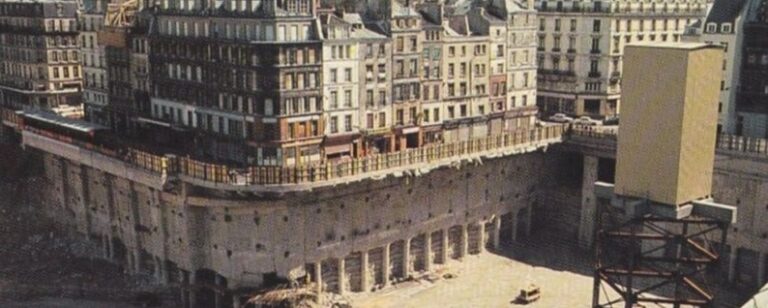
In the last scroll we explored the many ways civilizations can disappear.
Sand has buried them.
Forests have grown over them.
Ice has sealed them away.
Oceans have claimed their cities.
Time has a remarkable talent for covering its tracks.
But when we look at the fabric of our planet’s his-storical record that we are given…
we occasionally notice something curious.
The stitching isn’t always as tidy as we might expect.
◦
LOOSE THREADS IN THE RECORD
Sometimes a thread sticks out.
Sometimes those threads are small.
Sometimes they are…
entire sweaters.
(Ooouu, that thread really brings out the color of your lies…
Eyes…
I meant eyes.
I really did.)
And sometimes a curious mind notices that thread…
and begins to tug.
And when someone begins tugging on a thread, something interesting often happens.
The question stops living in distant his-story books.
It begins appearing in the present.
Because once curiosity wakes up, the eyes start noticing things that were always there.
BUILDINGS THAT MAKE US WONDER
Buildings, for example.
Magnificent buildings.
The kind constructed from massive stone and masonry.
Structures carved with extraordinary detail.
Grand halls, cathedrals, libraries, courthouses, capitols, and train stations whose scale and beauty still inspire awe today.
Buildings that make us pause for a moment and quietly wonder:
How did so many of these appear across the world in such a relatively short span of time?
Why do they all look alike?
Who built them?
How long did it take?
◦
Some were said to be built during periods when cities were much smaller.
Some were founded during times when construction technology was supposedly far more limited than what we have today.
And yet these structures stand with a kind of quiet confidence.
Massive columns.
Towering ceilings.
Giant doors and windows.
Domes that seem to carry sound effortlessly through space.
Stonework so intricate that replicating it today would require extraordinary time, skill, and cost.
◦
And when we stop to really think about it…
another curious observation appears.
Most of us did not build these structures.
Yet we live among them.
We work inside them.
We study in them.
We pass through them every day without giving them much thought at all.
They are simply… part of the landscape.
◦
CORNERSTONES AND QUESTIONS
Until one day a curious mind pauses.
Perhaps while walking past a courthouse.
Or climbing the steps of a grand library.
Or waiting for a train beneath an enormous vaulted ceiling.
And their eyes drift down to the cornerstone.
You know the one.
The small plaque set into the stone near the base of the building.
It usually says something like:
Founded…
Or sometimes:
Established…
◦
FOUNDED OR FOUND?
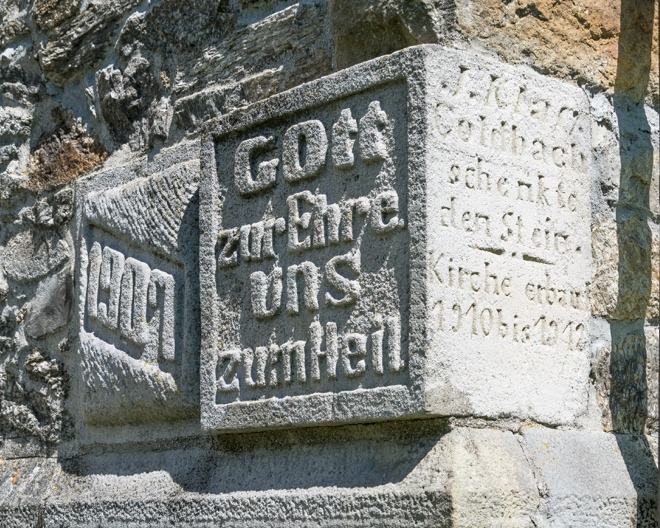
And that is when the curious mind tilts its head slightly.
Founded?
Established?
That’s an interesting choice of words.
Because when we found something…
it usually means we discovered it.
Which raises a small but rather entertaining question.
If these buildings were “founded”…
then what exactly was found?
◦
And suddenly another quiet realization slips into the room.
These magnificent structures…
were already here.
And once that little thread has been tugged…
the eyes begin noticing patterns.
Curious little patterns.
GORGEOUS PATTERNS IN ARCHITECTURE
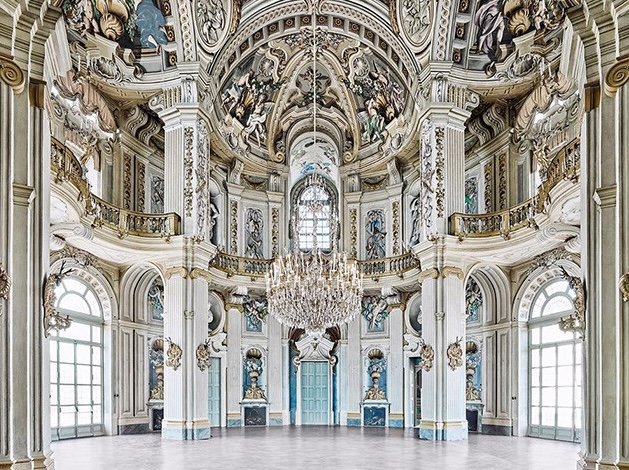
Architectural styles, for example.
Certain designs seem to appear in cities all across the world.
Grand columns.
Domes.
Ornate stonework.
Massive staircases leading to imposing entrances.
From capitol buildings to libraries to train stations, the similarities begin to feel… familiar.
Even when those buildings stand thousands of miles apart.
Almost as if they were following a shared architectural language.
◦
EYEBROW RAISING TIMELINES
And then there are the timelines.
Some of these monumental structures were reportedly constructed in remarkably short periods of time.
A year.
Two years.
Occasionally just a handful of years to complete buildings that today would require enormous teams, immense funding, and far longer timelines.
Modern renovation projects for major civic buildings can take years… sometimes even a decade.
Which again causes the curious mind to tilt its head slightly.
Really?
◦
OFFICIALLY THE OFFICIAL’S OFFICIAL STORY
Now at this point the curious mind usually does something rather dangerous.
It begins looking not only at the buildings themselves…
but at the stories surrounding them.
And that can get interesting.
Because an “official story” simply means the story told by officials.
It does not necessarily mean the story is complete.
Or even entirely accurate.
His-story, after all, has always been written by someone.
And authors, like the rest of us, tend to see the world through their own lens.
◦
THE CURIOUS CASE OF WORLD’S FAIRS
Which brings us to another rather curious thread.
The great world’s fairs of the late 1800s and early 1900s.
Entire cities of magnificent architecture.
Vast halls.
Domes.
Ornate palaces of stone…
…and plaster?
All reportedly constructed for temporary exhibitions.
And then, according to the official story…
torn down shortly afterward.
Massive buildings.
For a fair.
And then… demolished.
Well.
That certainly is an interesting story.
◦
GEOMETRY IN THE LANDSCAPE
And once curiosity has reached this point, the eyes often begin noticing something else.
Strange geometric fortifications scattered across the globe.
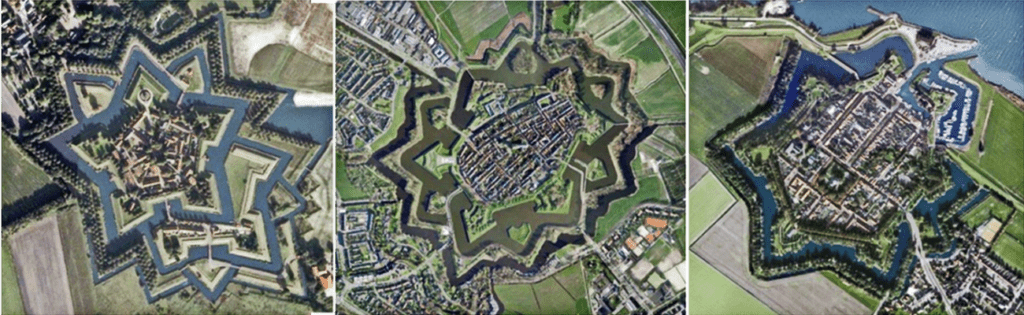
Star-shaped structures visible from the sky.
Perfectly symmetrical.
Strategically positioned near waterways and harbors.
Often labeled simply as forts.
And perhaps they were.
But their geometry is… intriguing.
◦
THE MAPS BEGIN TALKING
By this point the curious mind has usually stopped tugging gently.
Because the sweater is beginning to loosen.
And when that happens…
more threads tend to reveal themselves.
And when more threads reveal themselves, something else tends to happen.
The curious mind begins looking not only at buildings…
but at old maps.
Because maps are fascinating little time capsules.
They show us how people once understood the world.
What lands they knew.
What lands they guessed about.
And sometimes… what lands they named.
◦
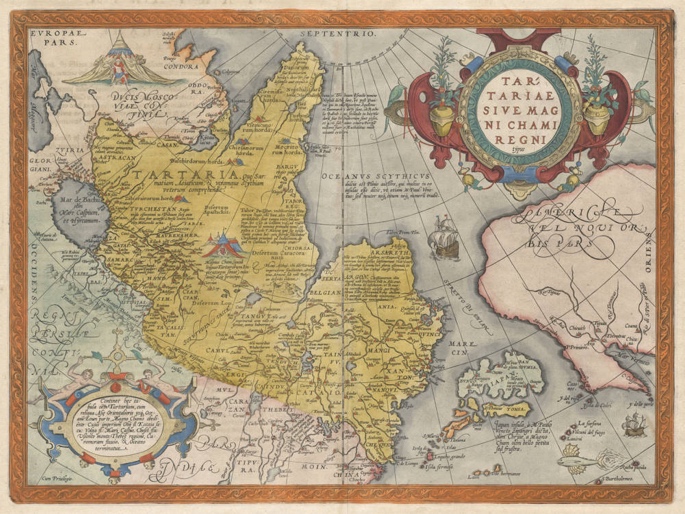
A WORD APPEARS ON THE MAP
And if one spends enough time wandering through old maps, atlases, and historical records, a rather curious word begins appearing.
Not once.
Not twice.
But over and over again.
Across maps created in different countries.
Across different centuries.
A word printed matter-of-factly across vast regions of land.
A word that once seemed completely ordinary to the people writing it.
◦
The word… Tartaria.
◦
Now here’s a small experiment.
Say the word quietly to yourself.
Tartaria.
◦
Notice what happens inside.
Does curiosity appear?
Skepticism?
Amusement?
Perhaps a small internal voice says:
“That feels familiar…”
Or:
“That sounds ridiculous.”
Or maybe another voice whispers:
“Wait… I’ve seen that somewhere before.”
◦
None of these reactions are wrong.
They are simply information.
Because curiosity does not require belief.
It only requires the willingness to look.
And once the word has been spoken, another rather simple question tends to follow.
If this word appeared so regularly on historical maps…
why do we hear so little about it today?
◦
AND JUST LIKE THAT, IT’S…GONE
Curiously, if one begins looking through older atlases and records, the word shows up quite comfortably.
Mapmakers used it without hesitation.
Sometimes labeling enormous regions as Great Tartary.
Sometimes Chinese Tartary.
Sometimes Independent Tartary.
To the people drawing those maps, it was simply a geographical description.
Nothing mysterious.
Nothing controversial.
Just another name on the page.
◦
And then, somewhere along the way…
the word quietly fades from the map.
Not with a dramatic announcement.
Not with a grand historical explanation.
It simply… disappears.
Replaced by newer political borders.
New names.
New categories.
◦
Now that alone is not unusual.
His-story does this sort of thing all the time.
Names change.
Borders shift.
Empires rise and fall.
Cartographers update their maps.
That’s part of the story of civilization.
◦
But when a curious mind has already begun tugging at threads…
the question still lingers gently in the background.
What exactly was being described by that word?
And how does it connect to all the other curious patterns we’ve been noticing?
◦
THE SWEATER UNRAVELS
Because by now the sweater has loosened considerably.
Architectural patterns.
Construction timelines.
World’s fairs.
Star-shaped fortifications.
And a name that once appeared comfortably across the maps of the world.
At a certain point curiosity begins doing what curiosity does best.
It keeps looking.
◦
And by this point the curious mind is usually doing something quite dangerous.
It keeps tugging.
And once curiosity reaches this point…
another rather entertaining question begins to appear.
If all of these threads are connected…
what exactly are we looking at?
◦
Perhaps these magnificent structures were simply the work of brilliant builders from the past.
That alone would already be impressive.
Entire generations of craftsmen working patiently with stone, geometry, and extraordinary skill.
◦
And yet, when the curious mind begins looking more closely at the his-storical records surrounding some of these projects…
the stories occasionally become rather entertaining.
Architects who reportedly won design competitions almost overnight.
Construction timelines that move with remarkable speed.
And in some cases, labor forces described as consisting largely of prisoners or convicts.
◦
Which again causes the curious mind to tilt its head slightly.
Because building something modest under those conditions might make sense.
But building monumental halls, vast capitols, enormous train stations, and cathedrals of stone…
in such short periods of time…
with such extraordinary precision…
well.
That tends to invite another look at the thread.
◦
The curious mind sometimes enjoys exploring other possibilities.
What if some of these structures were not built exactly the way we imagine?
What if, in certain cases, they were discovered…
repaired…
or repurposed?
After all, the cornerstone plaques do say “founded.”
◦
WHAT DID WE INHERIT?
Now imagination can be a dangerous thing.
But it can also be wonderfully useful.
Because once the idea of discovery enters the room, another playful question follows closely behind.
If these buildings were discovered…
or inherited…
what exactly did we inherit?
◦
Stone structures of extraordinary beauty.
Spaces with remarkable acoustics.
Geometry that seems almost intentional.
Buildings that feel less like simple shelters…
and more like instruments.
Many of the monumental structures we inherited were designed with extraordinary attention to harmony, proportion, and acoustics.
Domes that carry sound effortlessly through vast halls.
Stone and geometry that seem to guide the movement of vibration through space.
Walk beneath certain ceilings and even a quiet voice travels farther than expected.
A whisper becomes audible across the room.
A single note seems to linger in the air.
It almost feels as if the building itself is participating.
◦
Whether by careful design or long-forgotten intuition, the builders seemed to understand something about resonance.
How shape influences sound.
How materials carry vibration.
How geometry can organize energy in ways that are both beautiful and functional.
Some of these structures feel less like simple shelters…
and more like instruments.
◦
And that raises a rather intriguing thought.
If these buildings functioned as instruments of some kind…
what kind of music were they meant to play?
◦
Which brings us to a logical question.
If something has been inherited…
it usually means it has been passed down.
Which leads to more questions far more interesting than who built them.
What are we doing with them now?
Because inheritance is not really about the past.
It is about stewardship.
What happens when we begin understanding something we have inherited more deeply?
What new possibilities might appear?
How might we improve what has been placed in our hands?
◦
And once curiosity reaches this point…
another thought begins to appear.
If these magnificent structures existed before us…
then whether they were built, discovered, repaired, or repurposed…
they have something very simple in common.
We inherited them.
◦
These buildings stand in our cities.
We walk through their halls.
We study in their libraries.
We hold court in their chambers.
We gather beneath their domes.
They are part of the world we now call our own.
Which makes the next question rather unavoidable.
What exactly are we doing with this inheritance?
◦
Because inheritance is an interesting thing.
It is not merely something we receive.
It is something we choose how to steward.
Some inheritances are preserved.
Some are forgotten.
Some are misunderstood.
And occasionally…
some are rediscovered.
◦
Which raises another rather empowering thought.
Regardless of how these structures came to be…
the story is now in our hands.
We are the ones living among them.
We are the ones deciding how they are used.
We are the ones shaping the next chapter.
◦
WHO HOLDS THE PEN?
And that brings us to a question that reaches far beyond old maps and curious buildings.
Who is the author of our story?
The officials who write the records?
The historians who interpret them?
Or the people living the experience of the world today?
◦
Perhaps the most interesting possibility is this:
The pen may now be in our hands.
Perhaps…
it always was.
And we simply didn’t notice.
◦
When exploring his-story and you see a thread…
feel free to tug it.
Wait…
do we have a pile of yarn?
When you see a pot…
stir the pot.
Scrape the sides.
Or don’t.
It is your story now.
◦
